
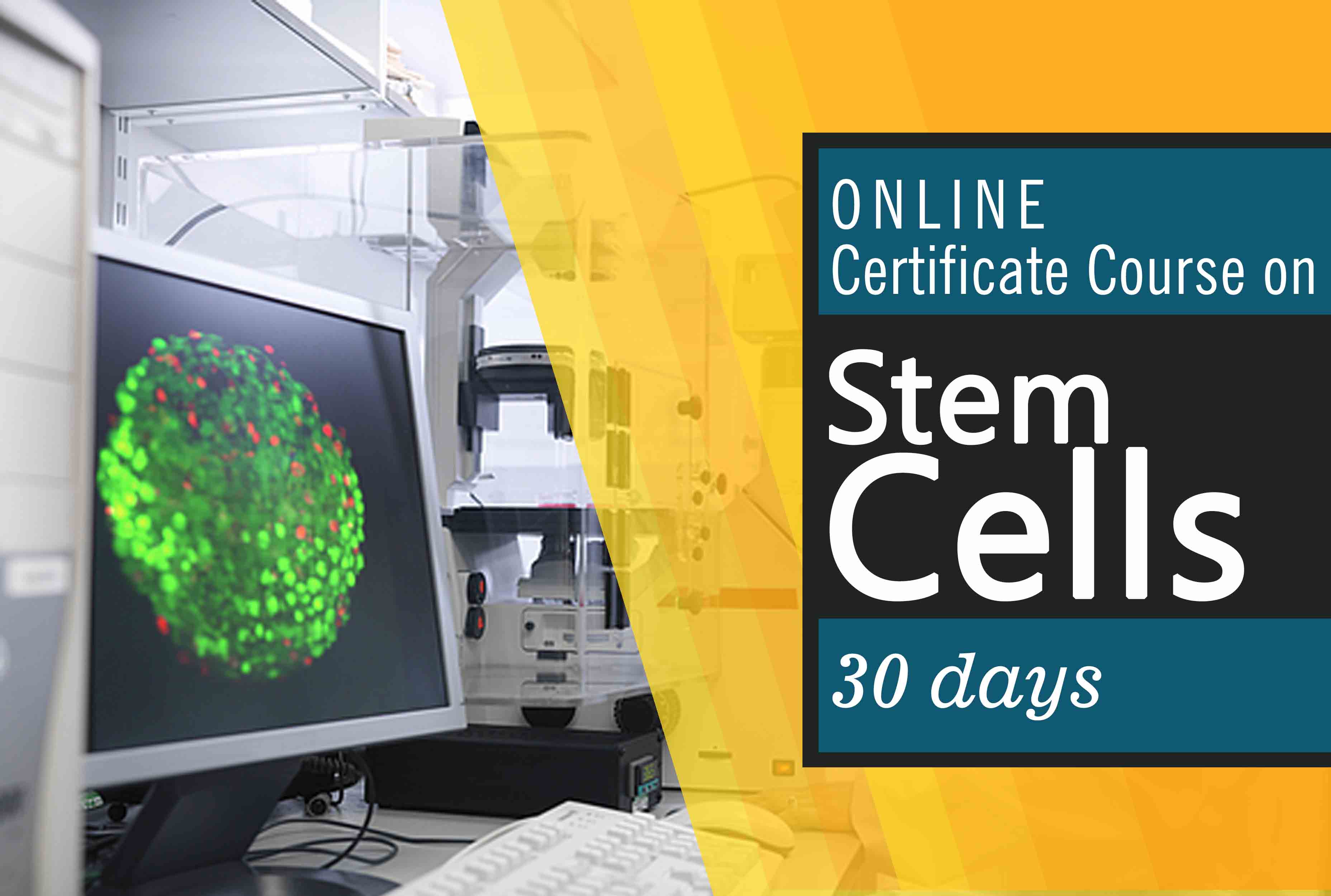
About programme
Stem cells are the unspecialised cells that possess the ability of self-renewal and special differentiation capacity that can give rise to any type of cells of the body. Currently the stem cell research can be regarded as a branch of modern biology that tries to utilise or alter embryonic or adult stem cells or to induce stem cells from differentiated cells into specialized, differentiated cells that can be used to supplant impaired cells or organs.
Stem cells is revolutionising the regenerative medicine sector and it provides immense hope for the medical world to treat the diseases which are once considered as non-treatable.
With the evolving technologies and interdisciplinary research networks, Cell biology is slowly and steadily revealing the potency of stem cells day-by-day.
We identify the subject as more important frontier field and hence we bring this course the learners who really want to be a part of the development aura which eventually take the mankind to next level.
Programme suitability
- The course is suitable for any learner who wants to learn and explore the subject stream of stem cells.
- The course is suitable for interdisciplinary researchers who want to know an overview on the development of stem cells and its application scope to improve their current research works.
- The course is suitable for the professionals of medical and paramedical field, who want to learn about stem cells in order to improve their knowledge and to provide effective counselling to the clients on the same.
- The course is suitable for the professionals who have got placement or about to get job in industries related to stem cell banking, tissue banking, cell culturing, cell and tissue culture related chemical and equipment manufacturers and suppliers.
- The course is suitable for learners who have stem cells, tissue engineering or regenerative medicine as elective in their academic curriculum and want to get fundamental knowledge on the same to excel in their elective subject examination.
Info video
What is covered in this programme?
- Unit 1: Basics of cell
- Unit 2: Basics of stem cell biology
- Unit 3: Applications of stem cells
- Unit 4: Stem cells ethics
- Unit 5: Current trends in stem cells
This unit provides a foundational understanding of biological organization, beginning with the cell. It thoroughly covers the cell's definition, various types, and essential functions, followed by a detailed look at the structure of a cell itself. Building upon this cellular knowledge, the unit then scales up to explore the basic structure of organs and introduces the Human Organ System. Finally, it integrates developmental and communication principles by examining Human embryogenesis and the critical process of Cell signalling.
Unit 2 introduces the core subject, starting with a comprehensive Introduction to stem cells, including their fundamental Classification and the critical concept of Pluripotency. This foundational knowledge leads into the biological mechanisms of Regeneration and differentiation in stem cells. The unit then extensively explores the major types of stem cells, beginning with Embryonic stem cells and covering various Adult stem cells, which include specialized types such as Haematopoietic, Muscle, Intestinal, Neural, Mammary, Mesenchymal, Endothelial, Skin, and Germline stem cells. Finally, the unit addresses two significant areas of research: the role of Cancer stem cells and the revolutionary technique of generating Induced pluripotent stem cells.
Unit 3 offers a broad look at the Applications of stem cells, providing a comprehensive overview of their clinical potential. The unit focuses heavily on Stem cell therapy, detailing its use in specific medical fields such as treating neurodegeneration, facilitating cardiac repair, and addressing conditions requiring ocular treatment or therapy for diabetes. Furthermore, it explores the synergistic role of Stem cells in gene therapy and their application in cutting-edge fields like Organ engineering and dental applications. The unit concludes by addressing the wide array of Non-clinical applications of stem cells.
Unit 4 shifts focus from the scientific to the societal, addressing the profound implications of this field by examining Ethics and stem cells. This includes a discussion of the Social point of stem cell research—exploring public perception, accessibility, and debate—and detailing the critical framework of Regulations in stem cell research and therapy necessary to ensure safety and responsible practice.
Unit 5 provides a forward-looking perspective on the field, outlining current Commercialisation trends in stem cells—focusing on market growth, product development, and industry movement—alongside major Research trends in stem cells that highlight cutting-edge scientific directions. The unit concludes with an Overview on job opportunities for stem cells professionals, offering career insights into this rapidly evolving sector.
Eligibility
- The applicant should be having or pursuing a degree in any of the streams under science, technology, engineering and medicine in any government approved institution/college/university.
- The candidate must possess basic knowledge in biology.
- The age of the applicant should be minimum of 18 years on the date of joining in this programme.
- The age of the applicant should not exceed 59 at the time of joining.
- School students and diploma students are not eligible for this programme.
Programme specifications
| Specifications | Details |
|---|---|
| Programme duration | 30 days |
| Programme code | BOC003 |
| Programme conducting type | Online |
| Language of learning | English |
| Daily timing(s) | Any time of your preference in a day |
| Assignments | Yes, Applicable. After completion of every unit. |
| Daily time requirement |
30 to 60 min per day for very active learners 60 to 90 min per for moderately active learners 90 to 120 min for slow learners |
| Mode of evaluation | Online assignment evaluation and online examination. Examination will not be applicable, if you opt for no certification. |
| Certificate options | Hard copy or E-certificate. You can also opt for no certification. |
| Minimum marks required for certification | 40% |
Fees
| For Indian students | For ROW Students |
|---|---|
| INR 1999 | INR 2499 |
| E-certification applicable For hard copy Rs.300 additional |
Click to see fee in USD E-certification only |
For admission
Share this programme information